In our quest for pristine indoor air, we’re constantly on the lookout for innovative solutions. The Ionic Air Purifier often appears as an appealing option, promising to clean your air without the hassle of filters or noisy fans. But what exactly is an ionic air purifier, and how does this technology truly impact the air we breathe? As experts in indoor air quality at Rlmex, we’re here to cut through the marketing jargon and give you the straightforward facts about these intriguing devices.
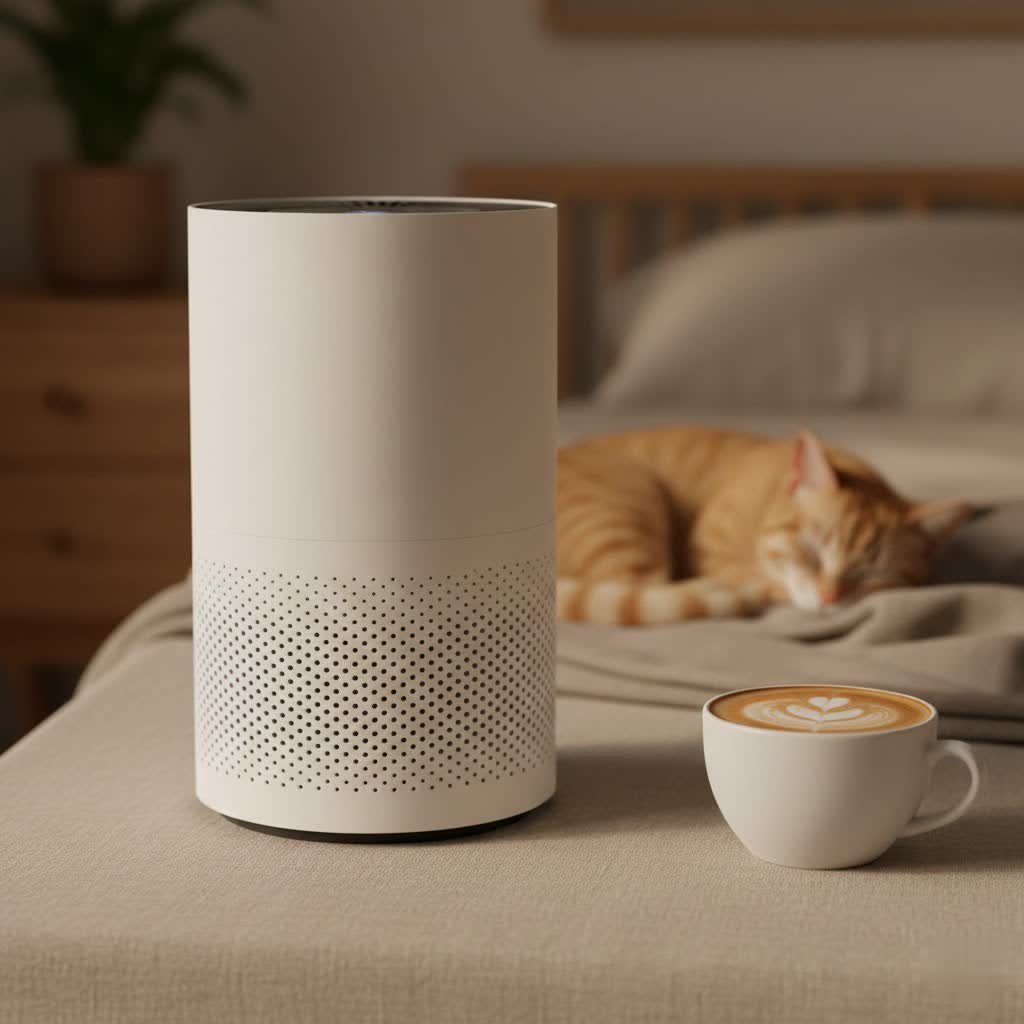
How Does an Ionic Air Purifier Actually Work?
At its core, an ionic air purifier, often simply called an ionizer, operates on a fascinating scientific principle: static electricity. Instead of physically drawing air through a filter, these devices release a stream of negatively charged ions into your living space. These tiny, invisible charged particles then go to work, seeking out airborne contaminants like dust, pollen, pet dander, smoke particles, and even some bacteria and viruses.
When a negative ion encounters one of these airborne pollutants, it attaches to it, imparting its negative charge. Suddenly, these once-neutral or positively charged particles become negatively charged themselves. And here’s where the magic happens: like tiny magnets, these newly charged particles are attracted to each positively charged surface in the room, including your walls, floors, furniture, and even your clothing. They also tend to clump together, becoming heavier. As a result, they fall out of the breathing air, settling onto these surfaces.
It’s crucial to understand that this process is about relocation, not removal. While the air feels cleaner because fewer particles are suspended, those pollutants haven’t vanished. They’ve simply moved from the air to your surfaces, where they can still be disturbed and potentially re-enter your breathing zone. Some advanced ionic purifiers do incorporate collection plates that are positively charged to attract and trap these particles within the unit, offering a more contained solution.
The Allure of Ionic Air Purifiers: What Are the Benefits?
Many homeowners are drawn to ionic air purifiers, and for good reason. They offer several compelling advantages that traditional filtered systems often can’t match.
First and foremost is the filter-free convenience and cost savings. Because ionic purifiers don’t rely on physical filters to trap particles, there are no recurring costs for filter replacements, and maintenance is generally simplified to wiping down surfaces and, in some cases, internal collection plates. This can be a significant draw for budget-conscious consumers.
Next, their whisper-quiet operation is a huge plus. Many ionic models, particularly the fanless varieties, operate with virtually no audible noise, making them ideal for bedrooms, offices, or any space where quiet is paramount. You can enjoy the sensation of cleaner air without the constant hum of a fan.
Finally, ionic air purifiers are often touted for their energy efficiency. With fewer mechanical parts and no powerful fan motors constantly running, they typically consume less electricity than their HEPA-filtered counterparts. They are also effective at tackling certain small airborne particles, like those found in smoke and strong odors, and some evidence suggests they can deactivate specific viruses and bacteria. This capability can be particularly appealing for reducing cooking smells or neutralizing pet odors.
Unpacking the Downsides: Important Considerations Before You Buy
While the benefits of an ionic air purifier might sound appealing, it’s vital to consider the potential drawbacks to make an informed decision for your home and health. As experts in air quality, we always prioritize safety and true effectiveness.
The Ozone Conundrum: A Breath of Fresh Air or a Health Risk?
|
Our Picks for the Best Air Purifier in 2026
As an Amazon Associate I earn from qualifying purchases.
|
||
| Num | Product | Action |
|---|---|---|
| 1 | Air Purifiers for Home Large Room, Cover Up to 2400 Ft² with True HEPA Filter, Smart Mode, PM2.5 Air Quality Display, 22dB Sleep Mode, Aromatherapy with 2X-Purification & 360°Air Outlet, HAP603, White |

|
| 2 | Air Purifiers for Home Large Room Cover Up to 1500 Ft² with True HEPA Filter, 20dB Sleep Mode, 360° Air Intake & Outlet, Air Cleaner for Bedroom Pets, 7 Color Light, HAP604, Bright White |
|
| 3 | ECOSELF Smart Air Purifier for Home Large Rooms, with WiFi Control, Covers Up to 2400 Ft², Smart Mode, AQI Display, 22dB Sleep Mode & Aromatherapy with 2X-Power Filtration, HAP603WF, White |
|
| 4 | Air Purifiers for Home Large Room up to 2200sq.ft with Washable Filters, EVALIT Air Purifiers for Bedroom with Fragrance, PM 2.5 Display Air Quality Sensor for Smoke Dust Odors, White, 1Pack+3Modes |
|
| 5 | LEVOIT Air Purifiers for Home Large Room Up to 1875 Ft² with Washable Pre-Filter, AHAM VERIFIDE, Air Quality Monitor, HEPA Sleep Mode for Allergies, Pet Hair in Bedroom, Vital 200S-P, White |
|
| 6 | LEVOIT Air Purifier for Home Large Room Up to 1073Ft² with Air Quality Monitor, AHAM VERIFIDE, Smart WiFi, Washable Pre-Filter, HEPA Sleep Mode for Pets, Allergies, Dust, Pollen, Vital 100S-P, White |
|
| 7 | Air Purifiers for Bedroom with H14 True HEPA, Quiet Air Cleaner With Sleep Mode Night Light, Small Air Purifier Covers Up to 1200ft², 360° Air Intake, 3 Speeds, Timer, Aroma Function, Black |
|
| 8 | LEVOIT Air Purifiers for Bedroom Home Dorm, AHAM VERIFIED, 3-in-1 Filter Claener with Fragrance Sponge, Portable Filters Smoke, Allergens, Pet Dander, Odor, Dust, Office, Desktop, Core Mini-P, White |
|
| 9 | LEVOIT Air Purifier for Home Allergies Pet Hair in Bedroom, Covers Up to 1073 ft² by 56W High Torque Motor, AHAM VERIFIDE, 3-in-1 Filter with HEPA Sleep Mode, Remove Dust Smoke Odor, Core300-P, White |
|
| 10 | KNKA Air Purifier for Home Bedroom Large Room Up to 3,500 Ft², HEPA Air Cleaner with Washable Pre-Filter, AHAM VERIFIDE, AQI Display, ECO Mode, Pet Mode for Pets, Allergies, Dust, Pollen, APH4000 |
|
This is arguably the most significant concern with many ionic air purifiers. The process of ionization, particularly through high-voltage electrical discharge, can produce ozone (O3) as a byproduct. While ozone in the Earth’s upper atmosphere is beneficial, shielding us from harmful UV rays, ground-level ozone is a powerful lung irritant and a harmful air pollutant.
Exposure to ozone, even at low levels, can have serious health implications, especially for sensitive individuals. It can trigger coughing, wheezing, shortness of breath, and chest pain, and can significantly worsen conditions like asthma, bronchitis, and other respiratory illnesses. The Environmental Protection Agency (EPA) and the Food and Drug Administration (FDA) both acknowledge these risks, with the FDA setting a limit of 0.05 parts per million (ppm) for medical devices.
It’s crucial to differentiate between an ionic air purifier and a dedicated “ozone generator” – the latter is designed specifically to produce high levels of ozone, often marketed for odor removal in unoccupied spaces, but is unequivocally dangerous for use in occupied areas. When considering an ionic air purifier, always look for devices that are certified as “ozone-safe” by reputable bodies like the California Air Resources Board (CARB), ensuring they produce minimal to no harmful ozone.
Particle Relocation vs. Removal: The Cleaning Cycle Continues
As we touched upon earlier, ionic air purifiers don’t truly remove airborne pollutants; they simply cause them to settle onto surfaces. This means that while your air might temporarily feel cleaner, the dust, dander, pollen, and other irritants are now coating your floors, furniture, walls, and electronics. These settled particles can easily be stirred up and re-aerosolized by everyday activities like walking, vacuuming, or even a strong draft, bringing them right back into your breathing space.
This requires more frequent and thorough cleaning of your home surfaces, which can negate some of the perceived “low maintenance” benefits. Moreover, ionic purifiers are generally less effective at dealing with larger particles like substantial dust or mold spores, and they typically do not remove gaseous pollutants, Volatile Organic Compounds (VOCs), or odors effectively without dangerous levels of ozone.
“While ionic air purifiers offer a quiet, filter-free experience, their primary mechanism is to settle particles, not to capture and remove them. This means you’re still living with those pollutants, just on a different surface, and the potential for ozone production remains a critical health consideration.” — Dr. Evelyn Reed, Environmental Health Scientist at Rlmex Research.
Ionic vs. HEPA: A Head-to-Head Comparison for Your Health
When it comes to air purification, the gold standard for particle removal is the High-Efficiency Particulate Air (HEPA) filter. Understanding the fundamental differences between ionic and HEPA technologies is vital for making an informed choice for your home.
HEPA Purifiers: These devices use a dense, pleated filter medium to physically trap airborne particles. A fan draws air through the filter, which is certified to capture at least 99.97% of particles 0.3 microns in size – including dust, pollen, pet dander, mold spores, and even many bacteria and viruses. HEPA purifiers actively remove pollutants from the air, collecting them within the filter where they are safely contained. Crucially, HEPA-only purifiers do not produce ozone or any other harmful byproducts. They are highly effective for allergy and asthma sufferers.
Ionic Air Purifiers: In contrast, as discussed, these devices rely on charging particles to make them settle. While some ionic units with collection plates do trap particles, the effectiveness often doesn’t match that of a true HEPA filter. Their inability to truly remove particles and the risk of ozone production are significant differentiating factors.
Ultimately, for comprehensive, safe, and effective particle removal from your indoor air, HEPA filtration remains the superior choice, especially for those with respiratory sensitivities or a desire for genuinely cleaner air.
Choosing and Using Your Ionic Air Purifier Wisely (If You Opt For One)
If, after weighing the pros and cons, an ionic air purifier still aligns with your specific needs, here’s how to choose and use one wisely to minimize potential risks:
- Prioritize Ozone Safety: This is non-negotiable. Look for models explicitly certified by organizations like the California Air Resources Board (CARB) to ensure they meet stringent ozone emission standards (less than 0.05 ppm). Avoid any product labeled as an “ozone generator” or that makes claims of “air sanitization” through high ozone output.
- Understand Its Limitations: Be realistic about what an ionic purifier can and cannot do. It can help reduce some airborne particles and odors, but it won’t replace the robust particle removal capabilities of a HEPA filter, nor will it effectively remove gases or VOCs.
- Embrace Regular Cleaning: Since particles settle on surfaces, you’ll need to increase your cleaning regimen. Regularly dust, vacuum (preferably with a HEPA-filtered vacuum), and wipe down surfaces to remove the settled pollutants and prevent them from becoming airborne again.
- Consider Placement: Place the unit in an area where settled particles can be easily cleaned. If your model has collection plates, ensure they are cleaned frequently according to the manufacturer’s instructions to maintain effectiveness.
- Combine Technologies: Some air purifiers offer a combination of technologies, like a HEPA filter with an optional and ozone-safe ionizer. In these cases, the ionizer can act as a pre-filter, helping particles clump before they reach the HEPA filter, potentially extending the HEPA filter’s life. However, always ensure the ionizer component itself is certified ozone-safe.
Frequently Asked Questions (FAQs) About Ionic Air Purifiers
Are ionic air purifiers safe for pets?
Due to the potential for ozone production, which can irritate the respiratory systems of both humans and animals, caution is advised. If you have pets, particularly those with respiratory issues, an ozone-safe, CARB-certified ionic air purifier is essential, or better yet, opt for a HEPA-filtered system.
Do ionic air purifiers remove viruses and bacteria?
Some studies suggest that ionic technology can inactivate certain viruses and bacteria by causing them to clump or rendering them inert. However, the effectiveness can vary greatly by device, and it’s generally less reliable and comprehensive than specialized filtration or UV-C light systems.
How often should I clean around my ionic air purifier?
Since ionic air purifiers cause particles to settle on surfaces, you should plan to clean surrounding areas (floors, furniture, walls, electronics) more frequently than usual. Aim for daily or every-other-day dusting and vacuuming in the immediate vicinity of the purifier to prevent re-aerosolization of pollutants.
Can an ionic air purifier replace a HEPA filter?
No, an ionic air purifier cannot fully replace a HEPA filter, especially for individuals with allergies, asthma, or other respiratory sensitivities. HEPA filters physically capture and remove particles from the air, providing a superior level of purification without producing ozone. Ionic purifiers primarily relocate particles.
What is the “black residue” often found around an ionic air purifier?
The “black residue” is visible evidence of the purifier’s operation. It’s composed of the airborne particles (like dust, smoke, and soot) that have been charged by the ionizer and attracted to nearby surfaces. While it shows the device is working, it also highlights that pollutants are settling in your home, not being removed.
Your Path to Cleaner Indoor Air
Understanding the ins and outs of an ionic air purifier is key to making choices that genuinely benefit your home’s air quality and your family’s health. While their filter-free design and quiet operation offer unique advantages, the critical considerations around ozone production and particle relocation versus true removal are not to be overlooked.
At Rlmex, we believe in empowering you with accurate, practical information so you can confidently choose the best air purification solution for your specific needs. Whether you opt for a carefully selected ionic device or a robust HEPA system, your commitment to cleaner air is a step toward a healthier living environment. Explore our resources to continue your journey toward optimal indoor air quality and breathe easier, knowing you’ve made an informed decision.
