Choosing the best large room air purifier involves matching its Clean Air Delivery Rate (CADR) and Air Changes Per Hour (ACH) to your room’s specific square footage and ceiling height, typically for spaces exceeding 300-500 square feet. These purifiers effectively remove airborne pollutants like dust, pollen, pet dander, and volatile organic compounds (VOCs) using multi-stage filtration systems, including True HEPA and activated carbon filters, to ensure a healthier indoor environment.
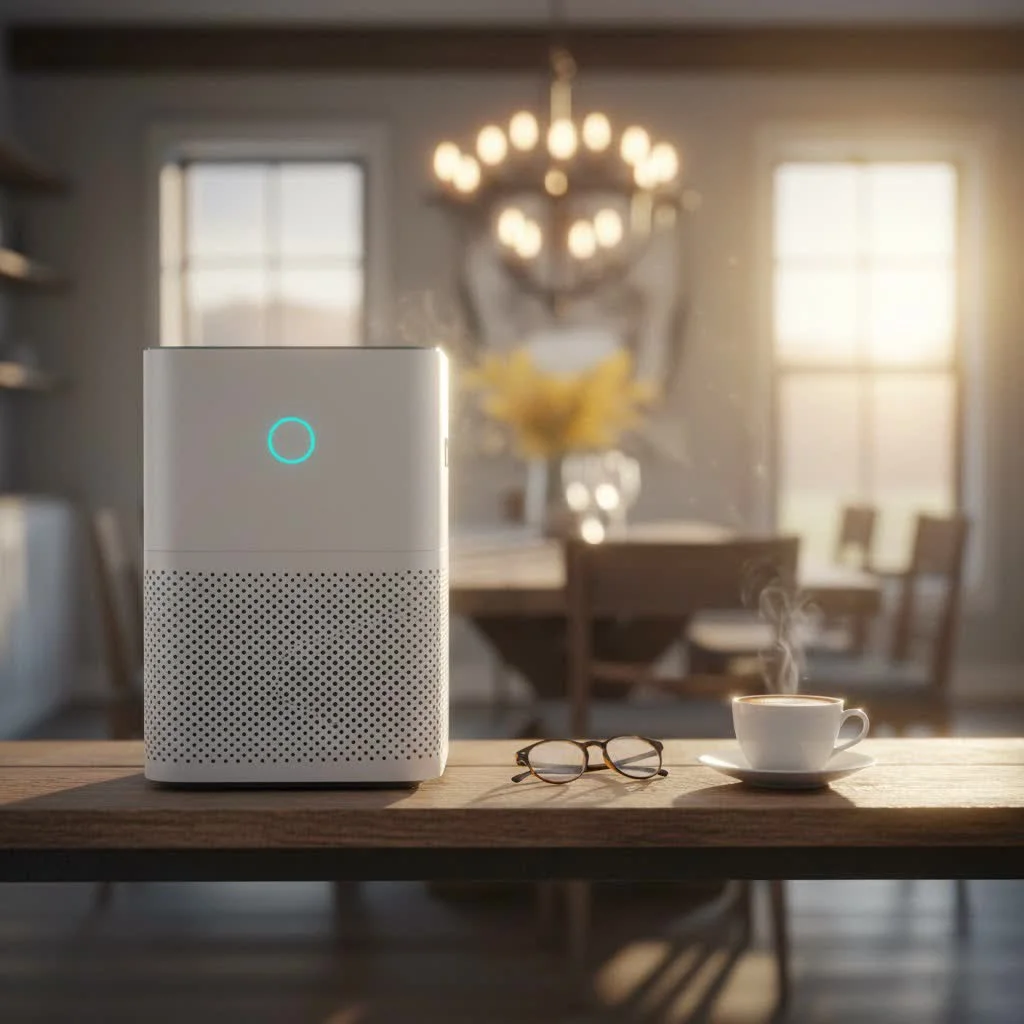
The air circulating in large areas is a complex mixture of dust, pollen, pet dander, mold spores, and even microscopic viruses and bacteria. Daily activities introduce VOCs from cleaning products, paints, and furniture, along with unpleasant odors from cooking or pets. Without a robust solution, these unseen intruders are constantly breathed in. A dedicated large room air purifier is engineered to tackle these challenges head-on, efficiently scrubbing the air clean so you and your loved ones can breathe easier, sleep better, and generally enjoy a healthier environment. For complete air purifiers library on this site.
What Defines a “Large Room” in Air Purifiers?
When discussing a “large room” for air purification, we generally refer to spaces exceeding 300-500 square feet, often reaching 800 square feet or even over 1,000 square feet. However, it’s not just about the floor plan; the room’s cubic volume, which includes ceiling height, is equally vital. A room that’s 500 sq ft with 8-foot ceilings has a different air volume than the same square footage with 12-foot cathedral ceilings. This is where key metrics come into play, helping you quantify exactly what your space demands from an air purification system.
Decoding CADR and ACH: Your Air Purifier’s Performance Metrics
Understanding these two acronyms is crucial for selecting an effective large room air purifier:
- CADR (Clean Air Delivery Rate): This is arguably the most important number to look for. CADR measures how quickly an air purifier removes pollutants from a room, specifically for smoke, pollen, and dust. It’s expressed in cubic feet per minute (CFM). A higher CADR indicates faster and more efficient air cleaning. For a large room, you’ll need a significantly higher CADR than for a small bedroom.
- ACH (Air Changes Per Hour): This metric tells you how many times the entire volume of air in a room is purified in one hour. For optimal health benefits, especially for allergy sufferers or in areas with high pollution, an ACH of 4.8 or more is highly recommended. This means the air in your large room is completely filtered roughly every 12-15 minutes. To calculate your ideal CADR, multiply your room’s square footage by its ceiling height, then multiply that by your desired ACH, and divide by 60 (minutes in an hour). This gives you a good target CFM for your purifier.
The Science Behind the Clean: Filtration Technologies
At the heart of every effective large room air purifier lies its filtration system. Understanding how these technologies work will empower you to choose a model that targets your specific air quality concerns.
True HEPA Filters: The Particle Powerhouses
|
Our Picks for the Best Air Purifier in 2026
As an Amazon Associate I earn from qualifying purchases.
|
||
| Num | Product | Action |
|---|---|---|
| 1 | LEVOIT Air Purifiers for Home Large Room Up to 1875 Ft² with Washable Pre-Filter, AHAM VERIFIDE, Air Quality Monitor, HEPA Sleep Mode for Allergies, Pet Hair in Bedroom, Vital 200S-P, White |

|
| 2 | KNKA Air Purifier for Home Bedroom Large Room Up to 3,500 Ft², HEPA Air Cleaner with Washable Pre-Filter, AHAM VERIFIDE, AQI Display, ECO Mode, Pet Mode for Pets, Allergies, Dust, Pollen, APH4000 |
|
| 3 | LEVOIT Air Purifier for Home Large Room Up to 1073Ft² with Air Quality Monitor, AHAM VERIFIDE, Smart WiFi, Washable Pre-Filter, HEPA Sleep Mode for Pets, Allergies, Dust, Pollen, Vital 100S-P, White |
|
| 4 | Air Purifiers for Home Large Room Cover Up to 1500 Ft² with True HEPA Filter, 20dB Sleep Mode, 360° Air Intake & Outlet, Air Cleaner for Bedroom Pets, 7 Color Light, HAP604, Bright White |
|
| 5 | LEVOIT Air Purifier for Home Allergies Pet Hair in Bedroom, Covers Up to 1073 ft² by 56W High Torque Motor, AHAM VERIFIDE, 3-in-1 Filter with HEPA Sleep Mode, Remove Dust Smoke Odor, Core300-P, White |
|
| 6 | ECOSELF Smart Air Purifier for Home Large Rooms, with WiFi Control, Covers Up to 2400 Ft², Smart Mode, AQI Display, 22dB Sleep Mode & Aromatherapy with 2X-Power Filtration, HAP603WF, White |
|
| 7 | Air Purifiers for Home Large Room, Cover Up to 2400 Ft² with True HEPA Filter, Smart Mode, PM2.5 Air Quality Display, 22dB Sleep Mode, Aromatherapy with 2X-Purification & 360°Air Outlet, HAP603, White |
|
| 8 | Air Purifiers for Home Large Room up to 2200sq.ft with Washable Filters, EVALIT Air Purifiers for Bedroom with Fragrance, PM 2.5 Display Air Quality Sensor for Smoke Dust Odors, White, 1Pack+3Modes |
|
| 9 | Air Purifiers for Bedroom with H14 True HEPA, Quiet Air Cleaner With Sleep Mode Night Light, Small Air Purifier Covers Up to 1200ft², 360° Air Intake, 3 Speeds, Timer, Aroma Function, Black |
|
| 10 | LEVOIT Air Purifiers for Bedroom Home Dorm, AHAM VERIFIED, 3-in-1 Filter Claener with Fragrance Sponge, Portable Filters Smoke, Allergens, Pet Dander, Odor, Dust, Office, Desktop, Core Mini-P, White |
|
True HEPA (High-Efficiency Particulate Air) filters are the gold standard for capturing airborne particles. They are certified to trap at least 99.97% of airborne particles 0.3 microns in size, which includes common irritants like dust, pollen, pet dander, mold spores, and even many bacteria and viruses. For anyone dealing with allergies, asthma, or general particulate pollution, a True HEPA filter is non-negotiable in a large room air purifier.
Activated Carbon Filters: Eliminating Odors and VOCs
While HEPA filters excel at particles, they don’t tackle gases, chemicals, or odors. That’s where activated carbon filters step in. These filters are made from highly porous carbon that has been treated to increase its surface area, allowing it to chemically absorb gaseous pollutants like smoke, cooking odors, pet smells, and volatile organic compounds (VOCs) emitted from household products, building materials, and furniture. For a comprehensive air cleaning solution in a large room, especially an open-concept area where cooking smells can spread, an air purifier combining both True HEPA and activated carbon filtration is essential.
Pre-filters and Multi-Stage Systems
Most high-quality air purifiers, particularly those designed for larger spaces, employ a multi-stage filtration process. This typically begins with a pre-filter, which captures larger particles like hair, lint, and larger dust. This protects the more delicate HEPA and carbon filters, extending their lifespan and maintaining the purifier’s overall efficiency. Some advanced systems may also include UV-C lights or ionizers, though their effectiveness and safety should be researched thoroughly, as some ionizers can produce ozone, a lung irritant.
Key Factors to Consider When Choosing Your Large Room Air Purifier
Navigating the market for a large room air purifier can feel overwhelming with the sheer number of options. To simplify your decision, focus on these critical factors:
1. Coverage Area and CADR: The Perfect Match
As discussed, this is paramount. Ensure the air purifier’s stated coverage area and CADR rating are sufficient for your room’s actual dimensions and cubic volume. Don’t underestimate your space; an underpowered unit will struggle to effectively clean the air, leading to frustration and wasted energy.
2. Noise Level: Peace and Quiet Matter
A powerful air purifier for a large room can sometimes be noisy, especially on higher fan settings. If you plan to use the unit in a living room, bedroom, or office, noise levels are a significant consideration. Look for models that specify their decibel (dB) ratings at various fan speeds. Many modern purifiers offer a “sleep mode” or lower settings that operate much quieter, often below 40-50 dB, while still providing effective purification.
3. Energy Efficiency: Keeping Electricity Bills in Check
An air purifier designed for a large space will naturally consume more power than a smaller unit. To avoid unexpectedly high electricity bills, look for models with an Energy Star certification. These appliances are designed to be more energy-efficient without compromising performance, saving you money in the long run.
4. Filter Replacement and Maintenance: Long-Term Costs
Filters are consumable items and will need to be replaced periodically. Research the cost and availability of replacement filters for any model you consider. Some high-end large room air purifiers feature washable pre-filters, which can help reduce ongoing costs. “Always consider the total cost of ownership, not just the upfront price,” advises Dr. Anya Sharma, a leading environmental health expert. “Factor in the cost and frequency of filter replacements when making your decision, as this can significantly impact your budget over time.”
5. Smart Features and Connectivity: Modern Convenience
Many advanced large room air purifiers come equipped with smart features that enhance user experience. These can include:
- Air Quality Sensors: Automatically detect airborne pollutants and adjust fan speed accordingly.
- Wi-Fi Connectivity and App Control: Allows you to monitor air quality, change settings, and schedule operation from your smartphone, even when you’re away from home.
- Timer Functions: Program the unit to turn on or off at specific times. These features offer a hands-off approach to maintaining optimal air quality.
6. Design and Portability: Blending In or Standing Out
While performance is key, the aesthetic appeal of your air purifier also matters, especially in a prominent large room. Many manufacturers now offer sleek, modern designs that can blend seamlessly into various interior decors. Consider if you’ll need to move the unit between rooms; while large room purifiers are generally less portable than smaller ones, some models include wheels or integrated handles for easier relocation.
7. Specific Air Concerns: Tailoring to Your Needs
Do you have pets? Is someone in your household prone to seasonal allergies or asthma? Do you live in an area with wildfire smoke or high levels of industrial pollution? Your specific air quality challenges should influence your choice. For pet owners, robust HEPA filtration combined with effective carbon filters for odors is crucial. For those in smoky environments, a unit with a particularly thick activated carbon filter will be beneficial.
Optimal Placement and Usage Tips for Your Large Room Air Purifier
Once you’ve chosen your ideal large room air purifier, proper placement and consistent use are key to maximizing its effectiveness.
- Strategic Placement: Position the air purifier in a central location within the large room, away from walls and furniture that could obstruct airflow. Placing it in an area where air naturally circulates, such as near a doorway or frequently used pathway, can also enhance its reach.
- Continuous Operation: For the best results, especially if you have ongoing air quality concerns like allergies or pet dander, it’s generally best to run your air purifier continuously. Modern, energy-efficient models are designed for this.
- Regular Maintenance: Adhere to the manufacturer’s recommendations for cleaning pre-filters and replacing HEPA and carbon filters. Neglecting filter changes will drastically reduce the purifier’s efficiency and can even put a strain on the motor.
The Irrefutable Benefits of a Large Room Air Purifier
Investing in a high-quality large room air purifier translates into a wealth of benefits for your health and overall well-being.
- Allergy and Asthma Relief: By effectively removing pollen, dust mites, pet dander, and mold spores, air purifiers can significantly reduce allergy symptoms and provide much-needed relief for asthma sufferers.
- Eliminates Odors: Say goodbye to persistent pet odors, cooking smells, and mustiness. Activated carbon filters neutralize these nuisances, leaving your large room smelling fresh and clean.
- Reduced Airborne Contaminants: From common cold and flu viruses to bacteria, a True HEPA filter can capture many airborne pathogens, contributing to a healthier environment.
- Cleaner Home Surfaces: You’ll likely notice less dust accumulating on your furniture and surfaces, as the air purifier actively removes these particles from the air before they can settle.
- Improved Sleep Quality: For many, cleaner air leads to easier breathing and fewer nighttime irritations, promoting more restful sleep.
Conclusion: Breathe Easy, Live Better
In today’s world, where indoor air quality can often be more polluted than outdoor air, a large room air purifier is a wise investment for any spacious home or office. It’s about taking control of your environment, transforming stale, allergen-filled air into a refreshing, healthy atmosphere. By carefully considering factors like CADR, filtration technology, noise level, and maintenance, you can confidently select a unit that perfectly matches the needs of your expansive space. Don’t just exist in your large rooms; thrive in them with clean, pure air that invigorates and protects. Take the step towards a healthier home today – your lungs will thank you.
Frequently Asked Questions
What is the ideal CADR for a large room air purifier?
The ideal CADR (Clean Air Delivery Rate) for a large room air purifier depends on the room's square footage and ceiling height. A general guideline is to aim for a CADR that can achieve at least 4.8 air changes per hour (ACH), meaning the air is filtered every 12-15 minutes. You can calculate your target CADR by multiplying your room's square footage by its ceiling height, then by your desired ACH, and dividing by 60.
How do True HEPA filters and activated carbon filters differ?
True HEPA filters are designed to capture at least 99.97% of airborne particles 0.3 microns in size, including dust, pollen, pet dander, and mold spores. Activated carbon filters, on the other hand, are made from porous carbon that chemically absorbs gaseous pollutants like smoke, cooking odors, pet smells, and volatile organic compounds (VOCs). For comprehensive air cleaning, a large room air purifier should ideally combine both filtration types.
How often should air purifier filters be replaced?
The frequency of air purifier filter replacement varies by model and usage, but generally, HEPA filters should be replaced every 6-12 months, and activated carbon filters every 3-6 months. Pre-filters, which capture larger particles, can often be cleaned and reused, extending the life of the more delicate HEPA and carbon filters. Always refer to the manufacturer's specific recommendations for your unit.
What are the key benefits of using a large room air purifier?
Using a large room air purifier offers several key benefits, including significant relief for allergy and asthma sufferers by removing pollen and pet dander. It also eliminates persistent odors from cooking or pets, reduces airborne contaminants like viruses and bacteria, and leads to cleaner home surfaces with less dust accumulation. Many users also report improved sleep quality due to breathing cleaner air.
Where is the best place to position a large room air purifier?
For maximum effectiveness, position your large room air purifier in a central location within the room, away from walls and furniture that could obstruct airflow. Placing it in an area where air naturally circulates, such as near a doorway or frequently used pathway, can also enhance its reach and ensure more efficient air purification throughout the entire space.
Choose the Best Large Room Air Purifier
Selecting an effective large room air purifier involves evaluating several key factors to ensure it meets your specific air quality needs and room dimensions.
First, measure your room's square footage and ceiling height to determine its cubic volume. This will help you understand the required Clean Air Delivery Rate (CADR) and Air Changes Per Hour (ACH) for effective purification. Aim for an ACH of 4.8 or more for optimal results in large spaces.
Prioritize air purifiers with True HEPA filters for capturing 99.97% of airborne particles like dust and allergens. For odors and volatile organic compounds (VOCs), ensure the unit includes an activated carbon filter. Multi-stage systems with pre-filters are recommended for extended filter life and efficiency.
Check the decibel (dB) ratings at various fan speeds, especially if the purifier will be in a living area or bedroom; look for models below 40-50 dB for quiet operation. Opt for Energy Star certified models to ensure energy efficiency and lower electricity bills, as large room purifiers consume more power.
Research the cost and availability of replacement filters, as these are ongoing expenses. Also, consider smart features like air quality sensors, Wi-Fi connectivity for app control, and timer functions for enhanced convenience and automated air quality management.
Tailor your choice to specific needs, such as pet dander, allergies, asthma, or smoke. For pet owners, robust HEPA and carbon filtration are crucial. In smoky environments, a thicker activated carbon filter will be more beneficial for removing gaseous pollutants.
Get our weekly buyer guide
Practical specs, not advice. Unsubscribe anytime.
Our old house has a lot of dust and pet dander from our two cats, and I was constantly sneezing. After getting a large room air purifier with a True HEPA filter, I’ve noticed a significant improvement in air quality. It’s quiet enough for the bedroom and really helps with my morning congestion.
I finally pulled the trigger on a large room air purifier for our open-concept living area, which is about 600 sq ft. The difference is incredible! My seasonal allergies have been so much better, and I’m not constantly dusting anymore. It’s definitely worth the investment for cleaner air.
I got a model with a good CADR rating for my basement, which is a pretty big space. It does a decent job with the musty smell, but the activated carbon filter seems to need replacing more often than I expected. It’s a bit noisy on the highest setting too, which can be annoying.
This purifier has been a game-changer for our office. We have a lot of foot traffic and it really helps with the general stuffiness and any lingering odors from lunch. Knowing it’s tackling VOCs from cleaning supplies makes me feel a lot better about the air we’re all breathing in a shared space.