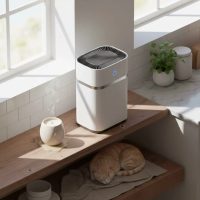
Stepping into a home with truly fresh, clean air is a breath of fresh air, literally. Many of us spend a significant portion of our lives indoors, and the quality of that air profoundly impacts our health and well-being. From stubborn pet dander and invisible dust to lingering cooking odors and seasonal allergens, our homes can harbor a cocktail of pollutants. But here’s the good news: the right home air purifier can be a game-changer, transforming your living space into a sanctuary of clean breathing. At Rlmex.com, we’re dedicated to helping you navigate the world of air purification, ensuring you make an informed choice for your family’s health.
Why Your Home Needs an Air Purifier: The Health Connection
Indoor air can often be more polluted than outdoor air, a surprising fact considering how much time we spend inside. This unseen pollution comes from various sources, including volatile organic compounds (VOCs) released by cleaning products and furniture, particulate matter (PM2.5) from cooking or candles, pet dander, dust mites, mold spores, and pollen infiltration from outside.
These airborne contaminants aren’t just an annoyance; they can significantly affect your health. For individuals with allergies or asthma, exposure to these triggers can lead to uncomfortable symptoms like sneezing, coughing, itchy eyes, and difficulty breathing. Even for those without pre-existing conditions, poor indoor air quality can contribute to headaches, fatigue, and a general feeling of unwellness. As Dr. Eleanor Vance, a leading environmental health specialist and Rlmex contributor, often states, “Investing in a quality air purifier is like building an invisible shield for your lungs, actively removing threats before they can cause harm. It’s a foundational step towards proactive health.” Regularly purified air can reduce allergy symptoms, support respiratory health, and even help improve sleep quality, creating a healthier, more vibrant home environment.
Understanding Air Purifier Technology: Beyond the Basics
Air purifiers aren’t one-size-fits-all devices. They employ various technologies to clean the air, each with its strengths. Understanding these mechanisms is key to selecting the best home air purifier for your needs.
The Filtration Foundation: HEPA and Activated Carbon
When it comes to effective air purification, two filter types stand out as the workhorses:
- HEPA Filters: Short for High-Efficiency Particulate Air, a True HEPA filter is the gold standard for capturing airborne particles. These filters are designed to trap 99.97% of airborne particles as small as 0.3 microns. This includes common allergens like dust mites, pollen, mold spores, and pet dander, as well as fine particulate matter (PM2.5) from smoke and pollution. You’ll often see “HEPA-type” or “HEPA-like” filters; while they offer some filtration, they don’t meet the stringent efficiency standards of a True HEPA filter.
- Activated Carbon Filters: While HEPA filters excel at capturing solid particles, activated carbon filters are your best friend for dealing with gases, odors, and Volatile Organic Compounds (VOCs). These porous carbon filters absorb molecules that cause unpleasant smells from cooking, pets, smoke, and household chemicals. A robust activated carbon filter is essential for a genuinely fresh-smelling home.
- Pre-filters: Most air purifiers include a washable or replaceable pre-filter. Its job is to capture larger particles like hair, lint, and larger dust, thereby protecting the more delicate HEPA and carbon filters and extending their lifespan.
Other Filtration Technologies
|
Our Picks for the Best Air Purifier in 2026
As an Amazon Associate I earn from qualifying purchases.
|
||
| Num | Product | Action |
|---|---|---|
| 1 | ECOSELF Smart Air Purifier for Home Large Rooms, with WiFi Control, Covers Up to 2400 Ft², Smart Mode, AQI Display, 22dB Sleep Mode & Aromatherapy with 2X-Power Filtration, HAP603WF, White |

|
| 2 | Air Purifiers for Home Large Room, Cover Up to 2400 Ft² with True HEPA Filter, Smart Mode, PM2.5 Air Quality Display, 22dB Sleep Mode, Aromatherapy with 2X-Purification & 360°Air Outlet, HAP603, White |
|
| 3 | Air Purifiers for Bedroom with H14 True HEPA, Quiet Air Cleaner With Sleep Mode Night Light, Small Air Purifier Covers Up to 1200ft², 360° Air Intake, 3 Speeds, Timer, Aroma Function, Black |
|
| 4 | Air Purifiers for Home Large Room up to 2200sq.ft with Washable Filters, EVALIT Air Purifiers for Bedroom with Fragrance, PM 2.5 Display Air Quality Sensor for Smoke Dust Odors, White, 1Pack+3Modes |
|
| 5 | LEVOIT Air Purifier for Home Large Room Up to 1073Ft² with Air Quality Monitor, AHAM VERIFIDE, Smart WiFi, Washable Pre-Filter, HEPA Sleep Mode for Pets, Allergies, Dust, Pollen, Vital 100S-P, White |
|
| 6 | LEVOIT Air Purifiers for Home Large Room Up to 1875 Ft² with Washable Pre-Filter, AHAM VERIFIDE, Air Quality Monitor, HEPA Sleep Mode for Allergies, Pet Hair in Bedroom, Vital 200S-P, White |
|
| 7 | KNKA Air Purifier for Home Bedroom Large Room Up to 3,500 Ft², HEPA Air Cleaner with Washable Pre-Filter, AHAM VERIFIDE, AQI Display, ECO Mode, Pet Mode for Pets, Allergies, Dust, Pollen, APH4000 |
|
| 8 | LEVOIT Air Purifier for Home Allergies Pet Hair in Bedroom, Covers Up to 1073 ft² by 56W High Torque Motor, AHAM VERIFIDE, 3-in-1 Filter with HEPA Sleep Mode, Remove Dust Smoke Odor, Core300-P, White |
|
| 9 | Air Purifiers for Home Large Room Cover Up to 1500 Ft² with True HEPA Filter, 20dB Sleep Mode, 360° Air Intake & Outlet, Air Cleaner for Bedroom Pets, 7 Color Light, HAP604, Bright White |
|
| 10 | LEVOIT Air Purifiers for Bedroom Home Dorm, AHAM VERIFIED, 3-in-1 Filter Claener with Fragrance Sponge, Portable Filters Smoke, Allergens, Pet Dander, Odor, Dust, Office, Desktop, Core Mini-P, White |
|
You might encounter other technologies in your search, each with its own set of considerations:
- UV-C Light Filters: These filters use ultraviolet light to neutralize airborne bacteria, viruses, and mold spores. While they can be effective for germicidal purposes, it’s crucial to ensure the UV-C component is safely contained within the unit to prevent ozone production, which can be irritating to the respiratory system.
- Ionic/Electrostatic Filters: These systems work by electrically charging particles, causing them to clump together and stick to positively charged collector plates or nearby surfaces. While they can be quiet and filter effectively, some models can generate ozone as a byproduct. Always look for models that are CARB (California Air Resources Board) certified to ensure low or no ozone emissions.
Key Performance Metrics You Can’t Ignore
Beyond filter types, a few numbers help you understand an air purifier’s real-world performance:
- CADR (Clean Air Delivery Rate): This metric, measured in cubic feet per minute (CFM), indicates how quickly an air purifier removes specific pollutants (smoke, dust, pollen) from a room. A higher CADR means faster air cleaning. A good rule of thumb is to choose a purifier with a CADR that is at least two-thirds of your room’s square footage for optimal performance.
- Room Coverage (Square Footage): Air purifiers are designed for specific room sizes. Trying to purify a large living room with a unit meant for a small bedroom will lead to disappointing results. Always match the air purifier’s stated coverage area to the size of the room where you intend to use it.
- Noise Level (dB): An air purifier is an appliance you’ll likely run for extended periods, so noise can be a significant factor. Measured in decibels (dB), quieter models are essential for bedrooms or living areas where you want to relax or concentrate. Many modern units feature a “sleep mode” for ultra-quiet operation at night.
- Energy Efficiency: Since air purifiers use electricity, looking for an Energy Star certified model can help keep your energy bills in check. These certifications indicate that the appliance meets strict energy-efficiency guidelines set by the EPA.
Finding Your Perfect Match: Factors to Consider
Choosing the best home air purifier involves more than just picking a top-rated model. It’s about aligning the purifier’s capabilities with your specific lifestyle and home environment.
Room Size and Placement
The first step is to accurately measure the square footage of the room where the purifier will be placed. A unit designed for a 200 sq. ft. room won’t effectively clean a 500 sq. ft. space. If you have an open-plan living area, you might need a higher CADR or multiple units. Strategically placing your air purifier is also important; ideally, it should be in a central location, away from walls and obstructions, to allow for optimal airflow. Prioritize areas where pollutants are highest, such as bedrooms (for allergens and sleep), kitchens (for cooking odors), or living rooms (for general air quality).
Specific Needs: Allergies, Pets, Smoke, and More
Your primary concerns will heavily influence your choice:
- Allergies and Asthma: Focus on models with True HEPA filtration and a high CADR for pollen, dust, and mold spores. Look for features like sensitive air quality sensors and an auto mode to respond to fluctuating allergen levels.
- Pet Owners: Pet dander and odors are common issues. Seek out air purifiers with robust multi-stage filtration, specifically including a high-quality activated carbon filter to tackle smells, alongside a True HEPA filter for dander.
- Smoke (Wildfire/Cooking/Tobacco): For smoke, both fine particulate removal (True HEPA) and effective odor absorption (activated carbon) are critical. Units with higher CADR ratings for smoke are particularly beneficial.
- Chemical Sensitivities/VOCs: A strong activated carbon filter is paramount for capturing VOCs emitted from household products, paints, and new furnishings.
Smart Features and User Experience
Modern air purifiers often come with features that enhance convenience and control:
- App Control and Wi-Fi Connectivity: Many models offer smartphone app control, allowing you to monitor air quality, adjust settings, set schedules, and receive filter replacement alerts remotely. Some even integrate with smart home systems like Amazon Alexa or Google Home.
- Auto Mode: This intelligent feature uses sensors to detect air quality and automatically adjusts fan speed to optimize purification, saving energy and effort.
- Air Quality Indicators: Digital displays or color-coded light rings provide real-time feedback on your indoor air quality, giving you peace of mind.
- Sleep Mode: Reduces fan speed and dims display lights for quiet operation during the night.
- Ease of Use: Consider how intuitive the controls are, how easy it is to replace filters, and the overall design aesthetic to ensure it blends seamlessly into your home.
Maintenance and Running Costs
An air purifier is an ongoing investment. Factor in the cost and frequency of filter replacements.
- Filter Lifespan: While manufacturer guidelines vary, True HEPA filters typically need replacement every 6-12 months, and activated carbon filters every 3-6 months. Pre-filters are often washable or require regular vacuuming (monthly).
- Replacement Filter Cost: These costs can add up, so research the price of replacement filters for any model you’re considering. Some models have long-lasting filters (e.g., 5 years for some Shark models), but their initial replacement cost can be higher.
Top Home Air Purifiers for 2025: Key Features Across Categories
While specific models constantly evolve, the characteristics that define the “best” remain consistent across categories. When you’re looking for the best home air purifier, keep these general features in mind:
- Best Overall: Expect a balanced performer with multi-stage True HEPA and activated carbon filtration, a robust CADR for its intended room size, smart features like app control and auto mode, and quiet operation at lower settings. These units offer an excellent blend of efficiency, convenience, and health benefits for most homes.
- Best Budget-Friendly: These purifiers prove you don’t need to break the bank for effective air cleaning. They typically feature essential True HEPA and activated carbon filtration, a decent CADR for medium-sized rooms, and straightforward controls, focusing on core purification without excessive smart features.
- Best for Large Rooms: High CADR ratings (often 300+ CFM) and the ability to cover vast square footage (1000 sq. ft. or more) are hallmarks here. Despite their power, leading models often maintain relatively quiet operation and include robust filtration systems to tackle pollutants across expansive spaces.
- Best for Allergies and Pets: These units often emphasize advanced multi-layer filtration, potentially including specialized pet filters or extra-thick activated carbon layers for odor control. They will have high True HEPA filtration efficiency to capture dander and allergens, coupled with powerful airflow.
Maximizing Your Air Purifier’s Effectiveness
Owning an air purifier is just the first step; using it correctly ensures you get the most out of your investment and enjoy the cleanest possible air.
First, run your air purifier consistently. For optimal results, especially if you have allergies or pets, keep your unit running whenever you’re home. Many modern purifiers are energy-efficient and quiet enough to operate 24/7.
Second, keep windows and doors closed while the air purifier is operating. Opening them introduces new pollutants from outside, making your purifier work harder and less efficiently.
Third, regularly maintain your filters. As Julian Picard, founder and CEO of Centerline Mechanical LLC, reminds us, “An air purifier is only as good as its filter. Neglecting filter maintenance is like driving a car without changing the oil—it won’t perform when you need it most.” Always follow the manufacturer’s guidelines for cleaning pre-filters and replacing HEPA and activated carbon filters. Ignoring this can lead to reduced efficiency, increased energy consumption, and even the re-release of trapped pollutants.
Finally, complement your air purifier with good cleaning habits. While an air purifier cleans the air, it won’t remove pollutants that have settled on surfaces. Regular dusting, vacuuming (preferably with a HEPA-filtered vacuum), and cleaning of hard surfaces are crucial to ensure settled particles are agitated back into the air where your purifier can capture them, or removed directly.
Frequently Asked Questions About Home Air Purifiers
Do air purifiers increase or decrease oxygen levels in the room?
No, air purifiers do not affect the oxygen levels in your home. Their function is to filter out impurities from the existing air, not to add or remove oxygen. You can breathe easy knowing your oxygen supply remains constant.
How many air purifiers do I need for my home?
The ideal number depends on your home’s size, layout, and your specific air quality concerns. For open-plan spaces, one powerful unit might suffice. In homes with multiple rooms or floors, it’s often more effective to have several smaller units placed in key areas like bedrooms, living rooms, and any room with pets or heavy odors, rather than trying to purify the entire house with a single unit.
Can air purifiers help with viruses and bacteria?
True HEPA filters are highly effective at capturing airborne particles, including many virus and bacteria-carrying aerosols, down to 0.3 microns. Some purifiers also incorporate UV-C light, which can neutralize certain pathogens. However, an air purifier should be considered part of a broader strategy for hygiene and health, not a standalone solution for disease prevention.
What’s the difference between an air purifier and a humidifier/dehumidifier?
These appliances serve different functions. An air purifier filters airborne pollutants to clean the air. A humidifier adds moisture to the air to relieve dryness, while a dehumidifier removes excess moisture to reduce humidity, both aiming to improve comfort and prevent mold growth. They can complement each other but perform distinct tasks.
Conclusion
Choosing the best home air purifier can feel like a big decision, but with a clear understanding of your needs and the technology available, it becomes a straightforward path to a healthier home. By prioritizing essential features like True HEPA and activated carbon filtration, matching the unit to your room size, and considering smart features for convenience, you can significantly improve your indoor air quality. At Rlmex.com, we believe that everyone deserves to breathe clean, fresh air. Take that confident step today toward a cleaner home environment and experience the tangible benefits for your health and well-being. Explore our resources at Rlmex.com to delve deeper into air purification and make the perfect choice for your household.
Get our weekly buyer guide
Practical specs, not advice. Unsubscribe anytime.