Battling mold in your home can feel like an uphill struggle, but when it comes to tackling those invisible airborne mold spores, a high-efficiency particulate air (HEPA) air purifier for mold stands out as a critical line of defense. As a leading expert in air purification, I’m here to guide you through how these remarkable devices work and why they’re essential for a healthier indoor environment.
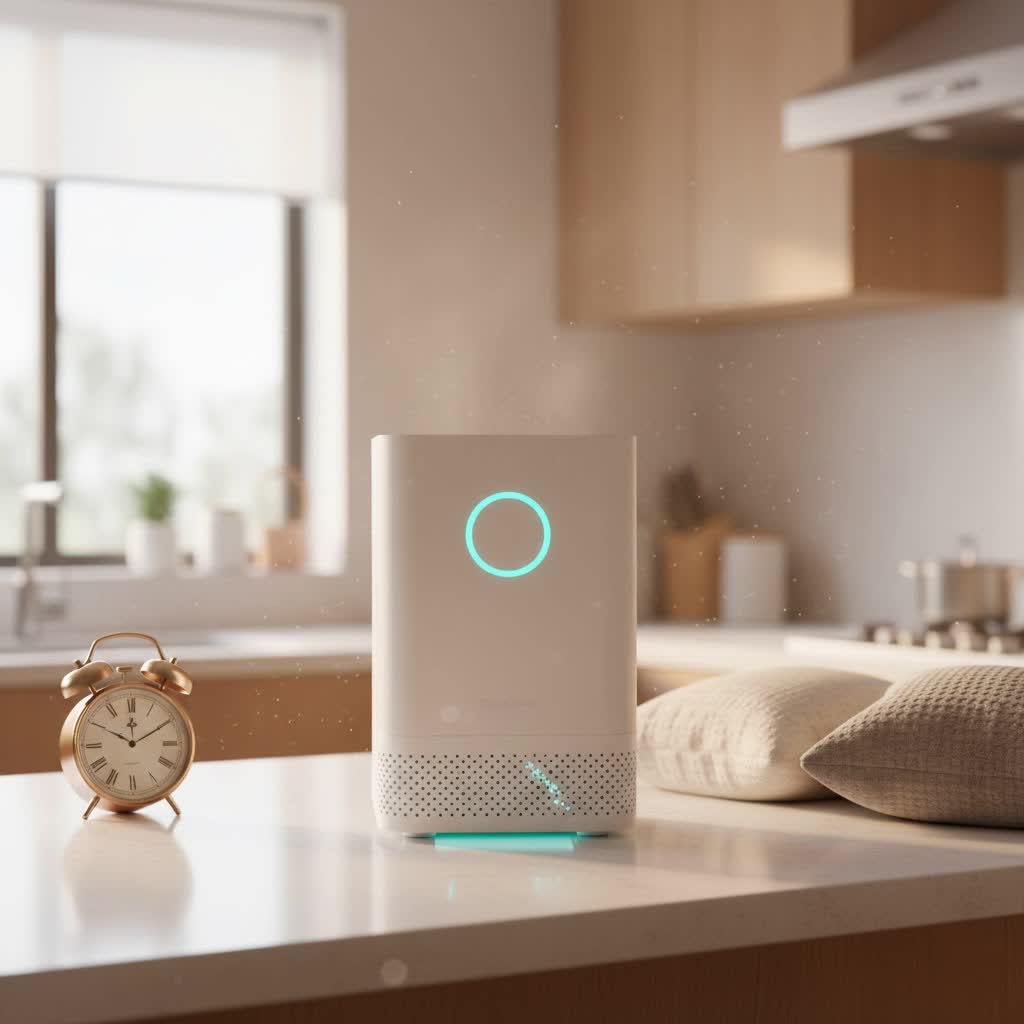
Mold is more than just an unsightly nuisance; it’s a pervasive fungus that reproduces by releasing microscopic spores into the air. These tiny invaders can trigger allergic reactions, worsen respiratory conditions like asthma, and even produce harmful substances called mycotoxins. While you might address visible mold growth, countless spores can remain suspended in your air, ready to settle and potentially create new colonies elsewhere. This is precisely where a quality HEPA air purifier steps in, working tirelessly to capture these airborne threats and significantly improve your indoor air quality.
Understanding the Unseen Enemy: What is Mold and Why Should You Care?
Mold is a type of fungus that thrives in damp, warm, and poorly ventilated environments. Think of those musty smells in basements, bathrooms, or around leaky windows – that’s often the tell-tale sign of mold actively growing. As mold colonies flourish, they release millions of spores, which are essentially the “seeds” of mold. These spores are incredibly small, typically ranging from 3 to 40 microns, making them easily inhalable and capable of traveling throughout your home on air currents.
The health implications of inhaling mold spores are significant. For many, exposure leads to allergic reactions, manifesting as sneezing, coughing, watery eyes, skin rashes, or even respiratory distress. Individuals with asthma or other existing respiratory conditions may find their symptoms severely exacerbated. Beyond allergies, certain types of mold can produce mycotoxins, which are toxic compounds that can have more serious health effects. Taking proactive steps to reduce airborne mold spores is crucial for protecting your family’s well-being.
The Science of Clean Air: How a True HEPA Air Purifier Works for Mold
When it comes to filtering mold spores from the air, not all air purifiers are created equal. The gold standard is a “True HEPA” filter. But what exactly does that mean, and how does it effectively capture something as tiny as a mold spore?
A True HEPA filter is a meticulously designed mesh of randomly arranged fiberglass fibers. To earn the “True HEPA” designation, a filter must meet rigorous U.S. Department of Energy standards, proving it can capture 99.97% of airborne particles as small as 0.3 microns in diameter. Considering that most mold spores are considerably larger than this (typically 3 to 40 microns), a True HEPA filter is exceptionally effective at trapping them.
The magic happens through three primary filtration mechanisms:
- Impaction: Larger mold spores, as they travel through the filter, directly collide with the fibers and get stuck.
- Interception: Mid-sized spores don’t necessarily collide head-on but drift close enough to the filter fibers that they adhere and become trapped.
- Diffusion: Even the tiniest mold spore fragments, smaller than 0.1 microns, move randomly in the air, increasing their chances of hitting a fiber and getting captured.
It’s vital to distinguish between a “True HEPA” filter and terms like “HEPA-type” or “HEPA-like.” These unregulated marketing phrases often denote filters that are far less efficient and may not provide the critical level of protection needed for mold spore removal. Always look for the explicit “True HEPA” or “HEPA 13” designation to ensure optimal performance against mold.
“A True HEPA filter isn’t just a component; it’s the heart of effective airborne mold spore removal. Its intricate design ensures that even the most microscopic threats are captured, giving you measurable improvements in indoor air quality,” says Dr. Elara Vance, a leading environmental health specialist and Rlmex.com contributor.
Beyond the Filter: Essential Features for a Mold-Fighting Air Purifier
While the True HEPA filter is indispensable, other features can significantly enhance an air purifier’s effectiveness against mold:
Activated Carbon Filters for Odor Elimination
|
Our Picks for the Best Air Purifier in 2026
As an Amazon Associate I earn from qualifying purchases.
|
||
| Num | Product | Action |
|---|---|---|
| 1 | Air Purifiers for Home Large Room Cover Up to 1500 Ft² with True HEPA Filter, 20dB Sleep Mode, 360° Air Intake & Outlet, Air Cleaner for Bedroom Pets, 7 Color Light, HAP604, Bright White |

|
| 2 | Air Purifiers for Home Large Room up to 2200sq.ft with Washable Filters, EVALIT Air Purifiers for Bedroom with Fragrance, PM 2.5 Display Air Quality Sensor for Smoke Dust Odors, White, 1Pack+3Modes |
|
| 3 | LEVOIT Air Purifier for Home Allergies Pet Hair in Bedroom, Covers Up to 1073 ft² by 56W High Torque Motor, AHAM VERIFIDE, 3-in-1 Filter with HEPA Sleep Mode, Remove Dust Smoke Odor, Core300-P, White |
|
| 4 | LEVOIT Air Purifiers for Home Large Room Up to 1875 Ft² with Washable Pre-Filter, AHAM VERIFIDE, Air Quality Monitor, HEPA Sleep Mode for Allergies, Pet Hair in Bedroom, Vital 200S-P, White |
|
| 5 | LEVOIT Air Purifiers for Bedroom Home Dorm, AHAM VERIFIED, 3-in-1 Filter Claener with Fragrance Sponge, Portable Filters Smoke, Allergens, Pet Dander, Odor, Dust, Office, Desktop, Core Mini-P, White |
|
| 6 | Air Purifiers for Home Large Room, Cover Up to 2400 Ft² with True HEPA Filter, Smart Mode, PM2.5 Air Quality Display, 22dB Sleep Mode, Aromatherapy with 2X-Purification & 360°Air Outlet, HAP603, White |
|
| 7 | Air Purifiers for Bedroom with H14 True HEPA, Quiet Air Cleaner With Sleep Mode Night Light, Small Air Purifier Covers Up to 1200ft², 360° Air Intake, 3 Speeds, Timer, Aroma Function, Black |
|
| 8 | LEVOIT Air Purifier for Home Large Room Up to 1073Ft² with Air Quality Monitor, AHAM VERIFIDE, Smart WiFi, Washable Pre-Filter, HEPA Sleep Mode for Pets, Allergies, Dust, Pollen, Vital 100S-P, White |
|
| 9 | KNKA Air Purifier for Home Bedroom Large Room Up to 3,500 Ft², HEPA Air Cleaner with Washable Pre-Filter, AHAM VERIFIDE, AQI Display, ECO Mode, Pet Mode for Pets, Allergies, Dust, Pollen, APH4000 |
|
| 10 | ECOSELF Smart Air Purifier for Home Large Rooms, with WiFi Control, Covers Up to 2400 Ft², Smart Mode, AQI Display, 22dB Sleep Mode & Aromatherapy with 2X-Power Filtration, HAP603WF, White |
|
Mold often brings with it that tell-tale musty, earthy odor. This smell is caused by microbial volatile organic compounds (MVOCs) released by the mold. A True HEPA filter alone won’t remove these gaseous odors. That’s where an activated carbon filter comes in. Activated carbon is highly porous and works through a process called adsorption, trapping odor molecules and chemical gases, thus neutralizing those unpleasant smells associated with mold. For homes dealing with active mold issues or residual mustiness, an activated carbon layer is a non-negotiable addition.
Clean Air Delivery Rate (CADR) for Room Coverage
The Clean Air Delivery Rate (CADR) indicates how quickly an air purifier can clean a room of a specific size. It’s measured in cubic feet per minute (CFM) for smoke, dust, and pollen. For mold, you’ll want a CADR that is appropriate for your room size. A higher CADR means the purifier can circulate and filter the air more times per hour, ensuring mold spores are captured efficiently before they can settle or be inhaled. Most experts recommend a CADR of at least two-thirds of your room’s square footage or an air change rate of 4-5 times per hour for effective mold spore removal.
A Sealed System for Ultimate Containment
What good is capturing mold spores if they can leak back out? A sealed system ensures that once mold spores and other particles are captured within the filter, they remain securely trapped. This prevents any bypass air from escaping around the filter, guaranteeing that all air passing through the unit is thoroughly cleaned.
The Role of UV-C Light and Antimicrobial Layers
Some air purifiers integrate UV-C light technology or antimicrobial layers into their design. UV-C light can damage the DNA of mold spores, reducing their ability to reproduce. However, for UV-C to be truly effective, spores need sufficient exposure time and intensity, which isn’t always achieved in consumer-grade purifiers. It’s also important to ensure any UV-C feature does not produce harmful levels of ozone, a respiratory irritant. Antimicrobial coatings on filters can help prevent mold and bacteria from growing on the filter itself, which can be a valuable safeguard over time.
Choosing the Right HEPA Air Purifier for Your Space
Selecting the perfect Hepa Air Purifier For Mold involves a few practical considerations:
- Room Size and CADR: Always match the purifier’s CADR to the size of the room where you intend to use it. An undersized unit won’t be effective.
- Filter Life and Cost: Filters are consumables. Check the recommended replacement schedule and the cost of replacement filters. This is an ongoing operational expense to factor into your budget.
- Noise Level: If the purifier will be running in a bedroom or office, a quieter model is preferable. Many high-performance units offer a “sleep mode” or lower fan settings for reduced noise.
- Energy Efficiency: Look for Energy Star certified models if you plan to run the unit 24/7, which is recommended for continuous mold spore management.
Using and Maintaining Your HEPA Air Purifier for Optimal Mold Control
Once you have your HEPA air purifier for mold, proper usage and maintenance are key to its effectiveness:
- Strategic Placement: Position the air purifier in areas prone to mold, such as basements, bathrooms, or rooms with previous water damage. Place it where it can draw in the most air, usually centrally or near the source of concern.
- Continuous Operation: For consistent air quality and mold spore management, run your air purifier 24/7. This ensures a continuous cycle of air filtration.
- Regular Filter Replacement: This is perhaps the most crucial maintenance step. Over time, filters become saturated with captured particles, including mold spores. Neglecting filter replacement can lead to reduced efficiency and, in some cases, even the re-release of contaminants. Always follow the manufacturer’s guidelines for filter replacement, typically every 6-12 months for HEPA filters and more frequently for activated carbon filters.
- Unit Cleaning: Periodically wipe down the exterior of your air purifier and clean any pre-filters to ensure optimal airflow and prevent dust buildup.
Important Caveats: What an Air Purifier Can’t Do
It’s crucial to set realistic expectations. While a HEPA air purifier for mold is a powerful tool for improving indoor air quality, it’s not a standalone solution for a mold problem:
- It Does Not Eliminate the Source: An air purifier captures airborne mold spores, but it does not address active mold growth on surfaces (walls, ceilings, furniture) or the underlying moisture issue that caused the mold in the first place. For persistent mold problems, you must find and fix the water source (e.g., a leaky pipe, high humidity) and physically remove the mold.
- It’s Not a Substitute for Remediation: If you have a significant mold infestation, professional mold remediation is essential. Air purifiers are a complementary tool to use after remediation to help keep lingering spores in check and prevent re-growth.
- Consider Dehumidifiers: In damp environments, a dehumidifier works hand-in-hand with an air purifier by actively removing moisture from the air, making it less hospitable for mold growth.
The Undeniable Health Benefits of Cleaner Air
Integrating a HEPA air purifier for mold into your home care routine offers significant health benefits. By continuously removing airborne mold spores, you are:
- Reducing Allergy Triggers: Many people experience fewer allergy symptoms, such as sneezing, congestion, and itchy eyes, in a home with reduced airborne mold.
- Alleviating Asthma Symptoms: For asthma sufferers, a cleaner indoor environment means fewer triggers, potentially leading to fewer attacks and easier breathing.
- Improving Overall Respiratory Health: Breathing cleaner air simply feels better and supports long-term lung health for everyone in your household.
- Eliminating Musty Odors: The activated carbon component ensures your home smells fresh, not damp and moldy.
Taking Control of Your Indoor Air Quality
Dealing with mold can be overwhelming, but a HEPA air purifier for mold empowers you to take control of your indoor air quality. By understanding how these devices work, what features matter most, and how to maintain them, you can create a safer, healthier breathing environment for yourself and your loved ones. Remember, it’s about a comprehensive approach: identifying and addressing moisture sources, physically removing existing mold, and then deploying a high-quality HEPA air purifier to keep those invisible mold spores out of your air. Your lungs will thank you.
