A HEPA air purifier is an essential tool for achieving cleaner, healthier indoor environments by capturing 99.97% of airborne particles as small as 0.3 microns, including dust, pollen, pet dander, and mold spores. These purifiers use a mechanical filtration process, drawing air through a dense mesh of fibers to trap particles, significantly improving indoor air quality and respiratory health.
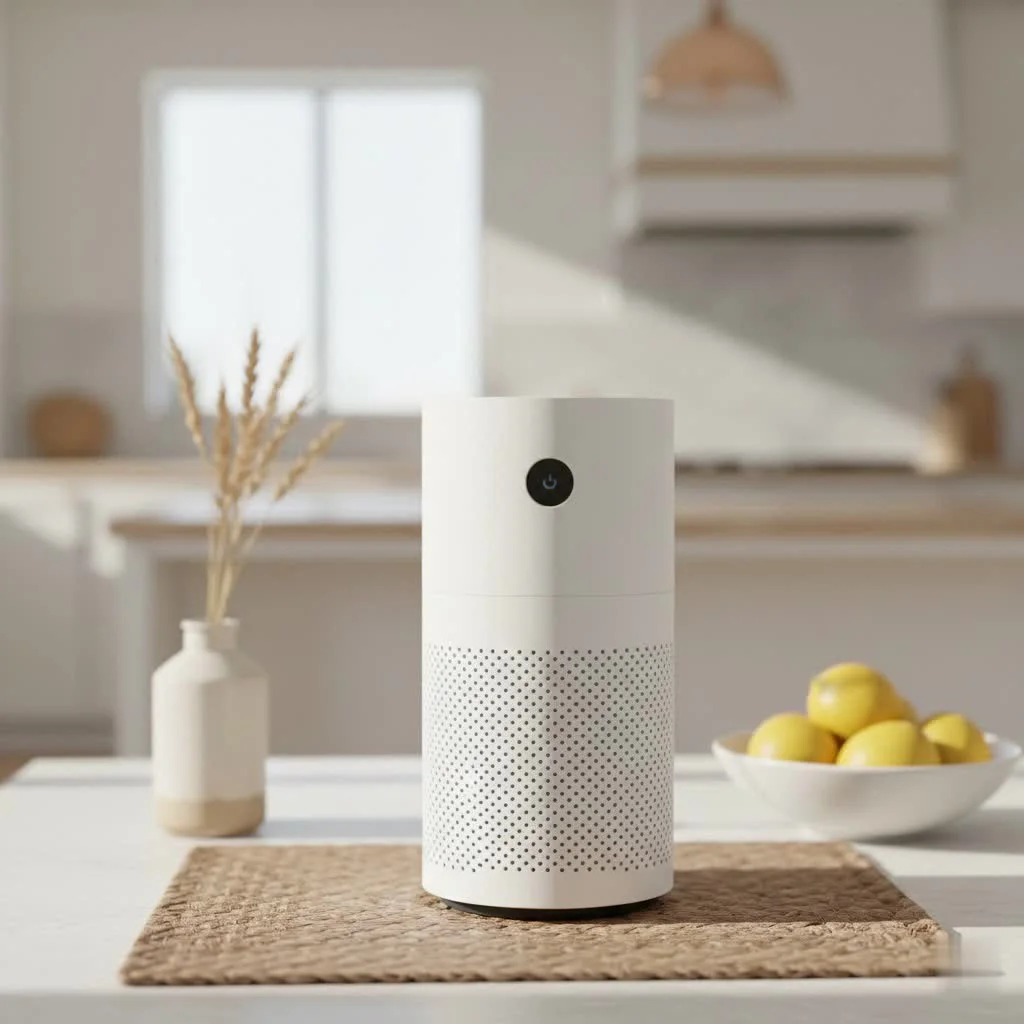
Understanding HEPA: More Than Just a Filter
- What is a True HEPA Filter? A True HEPA filter captures 99.97% of airborne particles as small as 0.3 microns, which is the industry standard for effective filtration.
- HEPA vs. “HEPA-type” or H13 HEPA “HEPA-type” filters do not meet the strict 99.97% efficiency standard and can be misleading. H13 HEPA filters, however, are even more efficient, capturing 99.95% of particles down to 0.21 microns, offering superior filtration.
- How HEPA Air Purifiers Work HEPA air purifiers operate through a mechanical filtration process, drawing air through a dense mesh of fibers that trap particles as they pass through.
- The Role of Multi-Stage Filtration:
- Pre-filters capture larger particles like dust and pet hair, extending the life of the main HEPA filter.
- Activated Carbon Filters are crucial for removing odors, smoke, and volatile organic compounds (VOCs). Look for units with pelleted carbon for better absorption compared to impregnated filters.
- Optional Stages like UV-C lights or Ionizers/PlasmaWave can be included, but caution is advised regarding potential ozone production, which can be an irritant.
Key Factors When Choosing Your Best HEPA Air Purifier
- Room Size and CADR (Clean Air Delivery Rate):
- CADR, measured in Cubic Feet per Minute (CFM), is the most important metric, indicating how quickly the purifier cleans a room.
- Air Changes Per Hour (ACH) refers to how many times the air in a room is completely filtered per hour; we recommend 4-5 ACH for optimal performance.
- To calculate the needed CADR for your room, multiply the room’s square footage by its ceiling height and divide by 5 (for 5 ACH).
- Be wary of manufacturers’ inflated claims and always verify CADR ratings.
- Noise Levels: Finding Your Quiet Zone:
- Noise levels are particularly important for bedrooms and offices where quiet operation is desired.
- Smaller units often produce more noise at higher fan speeds, while larger units can operate more quietly at lower speeds.
- Check the decibel (dB) ratings to ensure the unit meets your noise tolerance.
- Filter Type and Lifespan (Long-Term Costs):
- Consider both the initial purchase price and the recurring costs of replacement filters.
- Always opt for genuine filters to ensure optimal performance and longevity, as generic filters may not meet the same standards.
- Washable pre-filters can help reduce long-term costs by extending the life of other filters.
- Energy Efficiency: Saving on Your Electricity Bill:
- Energy efficiency is important, especially since air purifiers are often run 24/7.
- Check the wattage consumption to estimate operating costs.
- Smart Features and Convenience:
- Features like auto mode, air quality sensors, app control, and remote control enhance user convenience.
- A lights-off mode is beneficial for bedrooms to avoid light disruption.
- Prioritize the purifier’s core performance over an abundance of fancy technological features.
Top Picks for Various Needs (General Recommendations based on browsed data)
|
Our Picks for the Best Air Purifier in 2026
As an Amazon Associate I earn from qualifying purchases.
|
||
| Num | Product | Action |
|---|---|---|
| 1 | LEVOIT Air Purifiers for Home Large Room Up to 1875 Ft² with Washable Pre-Filter, AHAM VERIFIDE, Air Quality Monitor, HEPA Sleep Mode for Allergies, Pet Hair in Bedroom, Vital 200S-P, White |

|
| 2 | ECOSELF Smart Air Purifier for Home Large Rooms, with WiFi Control, Covers Up to 2400 Ft², Smart Mode, AQI Display, 22dB Sleep Mode & Aromatherapy with 2X-Power Filtration, HAP603WF, White |
|
| 3 | LEVOIT Air Purifiers for Bedroom Home Dorm, AHAM VERIFIED, 3-in-1 Filter Claener with Fragrance Sponge, Portable Filters Smoke, Allergens, Pet Dander, Odor, Dust, Office, Desktop, Core Mini-P, White |
|
| 4 | Air Purifiers for Home Large Room Cover Up to 1500 Ft² with True HEPA Filter, 20dB Sleep Mode, 360° Air Intake & Outlet, Air Cleaner for Bedroom Pets, 7 Color Light, HAP604, Bright White |
|
| 5 | KNKA Air Purifier for Home Bedroom Large Room Up to 3,500 Ft², HEPA Air Cleaner with Washable Pre-Filter, AHAM VERIFIDE, AQI Display, ECO Mode, Pet Mode for Pets, Allergies, Dust, Pollen, APH4000 |
|
| 6 | Air Purifiers for Home Large Room up to 2200sq.ft with Washable Filters, EVALIT Air Purifiers for Bedroom with Fragrance, PM 2.5 Display Air Quality Sensor for Smoke Dust Odors, White, 1Pack+3Modes |
|
| 7 | LEVOIT Air Purifier for Home Allergies Pet Hair in Bedroom, Covers Up to 1073 ft² by 56W High Torque Motor, AHAM VERIFIDE, 3-in-1 Filter with HEPA Sleep Mode, Remove Dust Smoke Odor, Core300-P, White |
|
| 8 | Air Purifiers for Bedroom with H14 True HEPA, Quiet Air Cleaner With Sleep Mode Night Light, Small Air Purifier Covers Up to 1200ft², 360° Air Intake, 3 Speeds, Timer, Aroma Function, Black |
|
| 9 | LEVOIT Air Purifier for Home Large Room Up to 1073Ft² with Air Quality Monitor, AHAM VERIFIDE, Smart WiFi, Washable Pre-Filter, HEPA Sleep Mode for Pets, Allergies, Dust, Pollen, Vital 100S-P, White |
|
| 10 | Air Purifiers for Home Large Room, Cover Up to 2400 Ft² with True HEPA Filter, Smart Mode, PM2.5 Air Quality Display, 22dB Sleep Mode, Aromatherapy with 2X-Purification & 360°Air Outlet, HAP603, White |
|
- Best Overall for Most Homes: Levoit Vital 200S
- Best for Large Spaces: Coway Airmega ProX, Levoit Core 600S
- Best for Small Rooms/Bedrooms: Xiaomi 4 Compact, Smart Air SA600S
- Best for Smoke & Odors (Heavy Duty Carbon): Austin Air HealthMate
- Best Quiet Performance: CleanAirKits Luggable XL-7
Maintaining Your HEPA Air Purifier for Peak Performance
- Regular Filter Replacement: Replace filters according to the manufacturer’s recommendations, typically every 6-12 months, as this is crucial for maintaining filtration efficiency.
- Cleaning Pre-filters: Regularly clean pre-filters to extend the lifespan of the main HEPA and carbon filters.
- Wiping Down the Unit: Periodically wipe down the exterior of the unit to keep sensors clear and ensure proper airflow.
- Placement Tips: For optimal airflow, place your air purifier away from walls and furniture, ideally in a central location within the room.
The Health Benefits of Using a HEPA Air Purifier
- Reducing Allergens and Irritants: HEPA purifiers effectively capture common allergens and irritants such as dust, pollen, pet dander, and mold spores.
- Combating VOCs and Odors: When equipped with activated carbon filters, these purifiers significantly reduce volatile organic compounds and unpleasant odors.
- Mitigating Airborne Pathogens: By capturing particles as small as 0.3 microns, HEPA filters can help reduce the presence of airborne pathogens like viruses and bacteria.
- Improving Overall Respiratory Health: Regular use can lead to improved respiratory health by reducing inflammation and minimizing triggers for asthma and other respiratory conditions.
Expert Insight: What We’ve Learned Over a Decade
- “After more than ten years in the air purification industry, we’ve consistently seen that investing in a true HEPA air purifier is one of the most impactful steps you can take for your indoor health. The difference in air quality is palpable, and the long-term health benefits are undeniable.”
Choosing the right HEPA air purifier is a vital step towards achieving healthier indoor air. By understanding key factors like CADR, filter types, and maintenance, you can make an informed decision. Rlmex.com is here to guide you in selecting the perfect unit for your needs, ensuring a cleaner, fresher environment for you and your family.
Frequently Asked Questions
Are more expensive air purifiers always better for air quality?
More expensive air purifiers are not always better; their effectiveness depends on factors like CADR, filter quality, and room size. A unit with a high CADR rating appropriate for your room size and genuine HEPA and activated carbon filters will provide excellent performance, regardless of price.
Is one large air purifier more effective than multiple small units?
One large air purifier is generally more effective than multiple small ones for a single large space, as it can achieve a higher CADR and more air changes per hour (ACH). However, for multiple distinct rooms, several smaller units strategically placed can be more beneficial for localized purification.
What is the best place to position an air purifier for optimal airflow?
For optimal airflow and filtration efficiency, the best place to position an air purifier is in a central location within the room, away from walls and furniture. This allows the unit to draw in and distribute purified air evenly throughout the space.
Do HEPA air purifiers effectively help reduce household dust?
Yes, HEPA air purifiers are highly effective at reducing household dust. A True HEPA filter captures 99.97% of airborne particles as small as 0.3 microns, including dust, pollen, pet dander, and mold spores, significantly decreasing the amount of dust circulating in your home.
How can I get the best results from my HEPA air purifier?
To get the best results from your HEPA air purifier, ensure it has an appropriate CADR for your room size, replace filters every 6-12 months as recommended, and regularly clean pre-filters. Proper placement away from obstructions also maximizes airflow and purification efficiency.
Get our weekly buyer guide
Practical specs, not advice. Unsubscribe anytime.
The air quality in my office definitely feels better with this purifier running. I appreciate that it’s a True HEPA filter, so I know it’s actually doing its job. My only complaint is that it’s a bit louder than I expected, especially on the higher settings, which can be a little distracting during calls.
I was skeptical about how much of a difference an air purifier could make, but I’m a convert! My home just smells fresher, and I’ve noticed less dust settling on surfaces. It’s great to know it’s capturing those tiny 0.3 micron particles, especially with all the pollen around lately.
After reading about the benefits of H13 HEPA filters, I decided to upgrade, and I’m so glad I did. The air in my bedroom feels noticeably cleaner, and I’m sleeping better. It’s reassuring to know it’s capturing even smaller particles than the standard HEPA.
I’ve been using a HEPA air purifier for a few months now, and the difference in my allergies is incredible. I used to wake up with a stuffy nose every morning, but since getting one, I’ve noticed a huge improvement. It’s really effective at capturing all the pet dander from my two cats.