An air purifier with an activated carbon filter is the best defense against gaseous pollutants, odors, and chemicals in your home or office. These filters use a process called adsorption to trap invisible threats like Volatile Organic Compounds (VOCs) and cooking smells, which HEPA filters cannot remove. r quality specialist with over a decade of experience, I’ve seen how these filters transform indoor environments by providing comprehensive air purification.
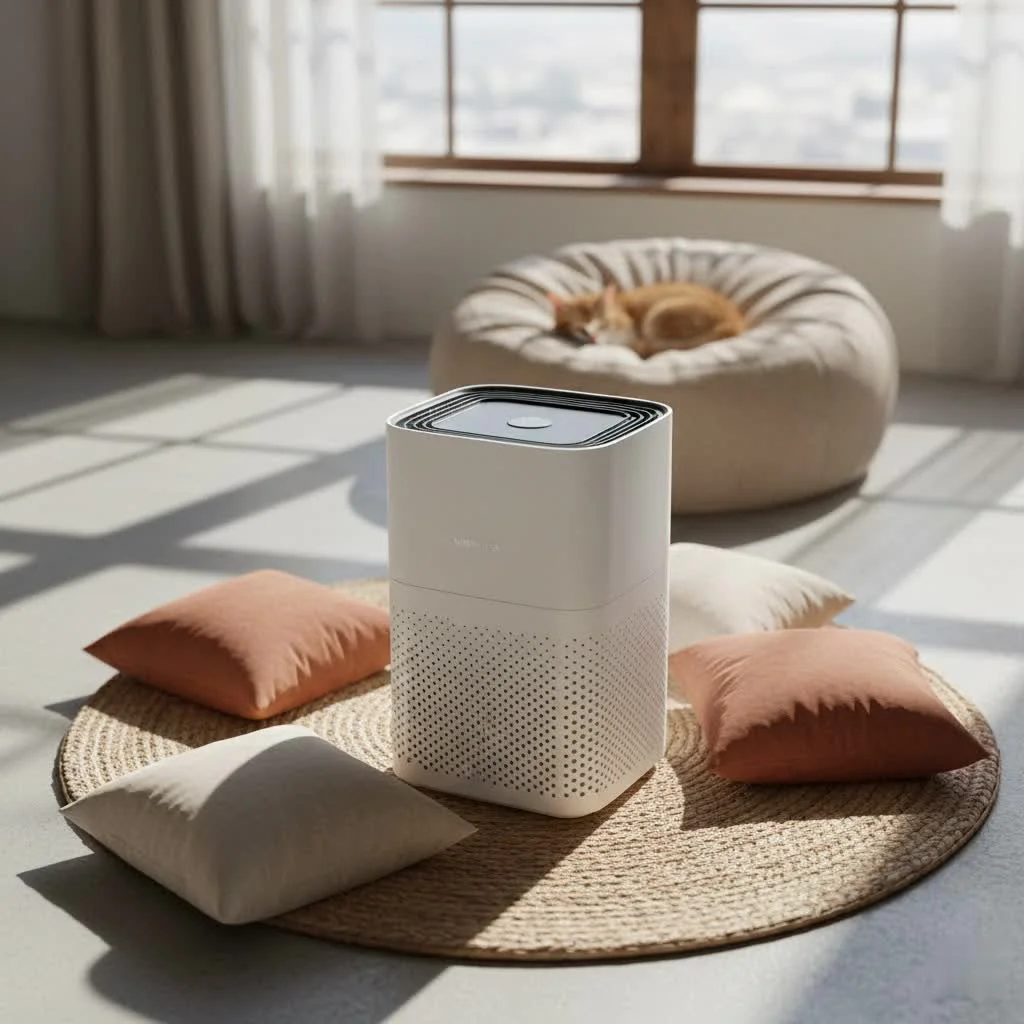
They’re not just an add-on; they’re an essential component for truly comprehensive air purification, tackling the pollutants that HEPA filters can’t touch. Let’s dive deep into why activated carbon is such a major upgrade for your home’s air.
What Exactly is an Activated Carbon Filter?
At its core, an activated carbon filter is made from specially treated carbon, often derived from materials like wood, coconut shells, or bamboo. The “activation” process involves heating the carbon in a low-oxygen environment and exposing it to steam or chemicals. This creates an incredibly porous structure, riddled with countless tiny pores and channels. Think of it like a miniature sponge, but one with an internal surface area so vast that a single gram can have a surface area equivalent to several tennis courts! This immense surface area is the secret to its power.
How Do Activated Carbon Filters Work Their Magic?
The mechanism behind activated carbon filters is a fascinating process called adsorption, not absorption. It’s a crucial distinction.
- Adsorption is when gas or liquid molecules adhere to the surface of a solid material. Imagine sticky tape: pollutants literally stick to the carbon’s surface and get trapped within its intricate network of pores.
- Absorption, on the other hand, is when molecules are soaked up into the entire volume of a material, like a sponge soaking up water.
In an air purifier, as air flows through the activated carbon filter, gaseous pollutants, odors, and chemicals come into contact with the carbon. Through weak physical forces (physisorption) or stronger chemical reactions (chemisorption), these contaminants bond to the carbon’s surface. This effectively removes them from the air stream, leaving cleaner, fresher air behind. It’s a highly efficient and natural way to purify your indoor environment.
The Invisible Threat: What Pollutants Do They Remove?
While HEPA filters are champions at capturing particulate matter like dust, pollen, and pet dander, they simply aren’t designed to handle gaseous pollutants. This is where the activated carbon filter steps in, targeting a range of invisible nasties:
Volatile Organic Compounds (VOCs)
What are VOCs? These are gases emitted from certain solids or liquids that can have short- and long-term adverse health effects.Where do they come from? VOCs are rampant in our homes, off-gassing from everyday items. Common sources include:
- Paints, varnishes, and paint strippers.
- Cleaning supplies, disinfectants, and air fresheners.
- New furniture, carpeting, and building materials.
- Aerosol sprays and perfumes.
- Cooking fumes and cigarette smoke.
- Stored fuels and automotive products in garages.
Why are they a problem? Exposure to VOCs can lead to headaches, nausea, eye/throat irritation, and over time, more serious respiratory or nervous system issues. An activated carbon filter effectively adsorbs these harmful chemicals, protecting your health.
Stubborn Odors
|
Our Picks for the Best Air Purifier in 2026
As an Amazon Associate I earn from qualifying purchases.
|
||
| Num | Product | Action |
|---|---|---|
| 1 | LEVOIT Air Purifiers for Bedroom Home Dorm, AHAM VERIFIED, 3-in-1 Filter Claener with Fragrance Sponge, Portable Filters Smoke, Allergens, Pet Dander, Odor, Dust, Office, Desktop, Core Mini-P, White |

|
| 2 | LEVOIT Air Purifiers for Home Large Room Up to 1875 Ft² with Washable Pre-Filter, AHAM VERIFIDE, Air Quality Monitor, HEPA Sleep Mode for Allergies, Pet Hair in Bedroom, Vital 200S-P, White |
|
| 3 | LEVOIT Air Purifier for Home Allergies Pet Hair in Bedroom, Covers Up to 1073 ft² by 56W High Torque Motor, AHAM VERIFIDE, 3-in-1 Filter with HEPA Sleep Mode, Remove Dust Smoke Odor, Core300-P, White |
|
| 4 | KNKA Air Purifier for Home Bedroom Large Room Up to 3,500 Ft², HEPA Air Cleaner with Washable Pre-Filter, AHAM VERIFIDE, AQI Display, ECO Mode, Pet Mode for Pets, Allergies, Dust, Pollen, APH4000 |
|
| 5 | Air Purifiers for Bedroom with H14 True HEPA, Quiet Air Cleaner With Sleep Mode Night Light, Small Air Purifier Covers Up to 1200ft², 360° Air Intake, 3 Speeds, Timer, Aroma Function, Black |
|
| 6 | LEVOIT Air Purifier for Home Large Room Up to 1073Ft² with Air Quality Monitor, AHAM VERIFIDE, Smart WiFi, Washable Pre-Filter, HEPA Sleep Mode for Pets, Allergies, Dust, Pollen, Vital 100S-P, White |
|
| 7 | Air Purifiers for Home Large Room Cover Up to 1500 Ft² with True HEPA Filter, 20dB Sleep Mode, 360° Air Intake & Outlet, Air Cleaner for Bedroom Pets, 7 Color Light, HAP604, Bright White |
|
| 8 | Air Purifiers for Home Large Room, Cover Up to 2400 Ft² with True HEPA Filter, Smart Mode, PM2.5 Air Quality Display, 22dB Sleep Mode, Aromatherapy with 2X-Purification & 360°Air Outlet, HAP603, White |
|
| 9 | Air Purifiers for Home Large Room up to 2200sq.ft with Washable Filters, EVALIT Air Purifiers for Bedroom with Fragrance, PM 2.5 Display Air Quality Sensor for Smoke Dust Odors, White, 1Pack+3Modes |
|
| 10 | ECOSELF Smart Air Purifier for Home Large Rooms, with WiFi Control, Covers Up to 2400 Ft², Smart Mode, AQI Display, 22dB Sleep Mode & Aromatherapy with 2X-Power Filtration, HAP603WF, White |
|
Tired of lingering smells? Activated carbon is a true hero for odor elimination. It doesn’t just mask smells; it removes the molecules that cause them. This makes it ideal for:
- Kitchen smells from cooking (especially strong ones like fried food or garlic).
- Pet odors (that distinct “wet dog” smell or litter box odors).
- Smoke (from cigarettes, fireplaces, or even wildfire smoke).
- Mildew and moldy smells.
- General household staleness.
Harmful Gases and Chemicals
Beyond VOCs, activated carbon can also tackle various other harmful gases and chemical pollutants, including benzene, formaldehyde, and even some light ozone. This makes it a critical component for anyone concerned about comprehensive indoor air purification.
Why Your Home Needs an Air Purifier with Activated Carbon
Integrating an activated carbon filter into your air purification strategy offers a multitude of benefits for both your environment and your well-being.
Drastically Improved Indoor Air Quality
By removing gaseous pollutants that other filters miss, an activated carbon filter ensures a more thorough and complete purification of your indoor air. This means breathing air that’s not just free of particles, but also free of chemical irritants and unpleasant smells.
A Fresh-Smelling Home, Naturally
One of the most immediate and noticeable benefits is the elimination of odors. Say goodbye to stale air, cooking remnants, or pet smells. Your home will feel fresher and more inviting without the need for artificial air fresheners that often just add more chemicals to the air.
Enhanced Health and Well-being
Reducing your exposure to VOCs and other chemical pollutants can significantly benefit your health. For individuals with chemical sensitivities, allergies, or respiratory conditions like asthma, cleaner air free from these irritants can lead to fewer symptoms and improved overall respiratory health.
“An activated carbon filter is non-negotiable for anyone serious about tackling odors and chemical pollutants,” advises Dr. Anya Sharma, a leading environmental health specialist. “It’s the unsung hero working silently to ensure your home isn’t just clean, but truly healthy.”
The Perfect Pair: Activated Carbon and HEPA Filters
It’s common to hear people ask whether they need a HEPA or an activated carbon filter. The best answer is: you need both! They are not interchangeable; rather, they are complementary components of a comprehensive air purification system.
- HEPA filters excel at capturing particulate matter – microscopic solids like dust, pollen, pet dander, mold spores, and PM2.5 particles. These are physical irritants that can trigger allergies and asthma.
- Activated carbon filters specialize in adsorbing gaseous pollutants – chemical vapors, VOCs, and odors. These are molecular threats that HEPA filters cannot trap.
An air purifier that combines both a True HEPA filter and a robust activated carbon filter provides the most complete defense against the full spectrum of indoor air pollutants, ensuring you breathe the cleanest possible air.
Choosing the Right Activated Carbon Air Purifier
With so many options on the market, how do you pick the best air purifier with activated carbon for your needs? Here are the key factors to consider:
The Amount and Type of Activated Carbon
This is perhaps the most critical factor.
- Weight Matters: The more activated carbon a filter contains, the more effective it will be at adsorbing pollutants and the longer it will last. Look for purifiers that specify the weight of their carbon filter, ideally several pounds for significant impact.
- Pelletized Carbon is Superior: Thin, fibrous filters with a mere coating of carbon are often less effective and saturate quickly. Prioritize models with thick, granular, or pellet-based activated carbon filters, as these offer a much larger surface area for adsorption.
Room Size and CADR (Clean Air Delivery Rate)
Ensure the air purifier’s CADR rating matches the size of your room. A higher CADR means the unit can purify the air in a larger space or change the air more frequently in a smaller one. Look for a purifier that can provide at least 4-5 air changes per hour for optimal effectiveness.
Multi-Stage Filtration (HEPA + Carbon)
As discussed, the best performance comes from units that combine a True HEPA filter with an activated carbon filter for comprehensive particle and gas removal. Many high-quality purifiers will also include a pre-filter to capture larger particles and extend the life of the main filters.
Noise Level and Additional Features
Consider the purifier’s operating noise, especially if it’s for a bedroom or living area. Look for models with various fan speeds and a “sleep mode.” Smart features like air quality sensors, auto mode, and app control can also enhance convenience and efficiency.
Filter Replacement Costs and Frequency
Activated carbon filters, like all filters, need regular replacement to remain effective. Research the cost and availability of replacement filters and the manufacturer’s recommended replacement schedule. Neglecting to change filters can lead to reduced performance or even the re-release of trapped pollutants.
Maintaining Your Activated Carbon Filter for Peak Performance
Even the best activated carbon filter will eventually become saturated with pollutants and lose its effectiveness. Just like a sponge can only hold so much water, activated carbon can only adsorb a finite amount of gases and chemicals.
- Regular Replacement is Key: Most manufacturers recommend replacing activated carbon filters every 6 to 12 months, though this can vary based on your indoor air quality and how often you run the purifier. Always follow the manufacturer’s specific guidelines.
- Don’t Risk Re-emission: An oversaturated filter won’t just stop working; in some conditions, it can actually start to re-emit previously trapped pollutants back into your air. This is why timely replacement is not just about efficiency, but also about safety.
By diligently maintaining your air purifier with an activated carbon filter, you ensure it continues to provide your home with the clean, fresh, and healthy air you deserve.
Conclusion
In a world where indoor air pollution is an increasing concern, an air purifier with an activated carbon filter stands out as a vital tool for safeguarding your health and enhancing your living environment. It offers an unparalleled ability to tackle the invisible gaseous threats – VOCs, chemicals, and odors – that traditional particle filters simply cannot address. By understanding how these powerful filters work, what they remove, and how to choose and maintain the right one, you’re empowered to make informed decisions for a healthier home. Invest in clean air; your lungs will thank you.
Frequently Asked Questions
What is the primary function of an activated carbon filter in an air purifier?
The primary function of an activated carbon filter is to remove gaseous pollutants, odors, and Volatile Organic Compounds (VOCs) from the air. Unlike HEPA filters that capture particles, activated carbon uses adsorption to trap molecular threats, significantly improving indoor air quality.
How often should an activated carbon filter be replaced?
Most manufacturers recommend replacing activated carbon filters every 6 to 12 months. This frequency can vary based on your indoor air quality and how often the air purifier is used. Regular replacement is crucial to prevent the re-emission of trapped pollutants.
Can an activated carbon filter remove all types of air pollutants?
An activated carbon filter is highly effective at removing gaseous pollutants, chemicals like benzene and formaldehyde, and various odors. However, it does not effectively capture particulate matter such as dust, pollen, or pet dander; for these, a HEPA filter is required.
What is the difference between adsorption and absorption in air purification?
Adsorption is the process where gas or liquid molecules adhere to the surface of a solid material, like pollutants sticking to carbon's porous structure. Absorption, conversely, is when molecules are soaked up into the entire volume of a material, similar to a sponge soaking up water. Activated carbon filters work through adsorption.
Why is the weight of activated carbon important in a filter?
The weight of activated carbon in a filter is critical because more carbon means greater effectiveness and a longer lifespan for adsorbing pollutants. Filters with several pounds of granular or pellet-based carbon offer a much larger surface area for adsorption compared to thin, fibrous filters.
Get our weekly buyer guide
Practical specs, not advice. Unsubscribe anytime.
I bought an air purifier with an activated carbon filter specifically for pet odors, and while it helps, it’s not a complete miracle worker. It definitely reduces the smell, but I still notice a faint dog smell sometimes, especially after a rainy walk. I was hoping for a bit more from the adsorption process. Maybe I need a larger unit for my space.
I got one of these for my home office because I was concerned about VOCs from new furniture. It seems to be working well, and I’ve noticed a definite improvement in the overall air quality. I appreciate that it tackles those invisible threats that regular filters miss. My only minor complaint is that the replacement filters can be a bit pricey, but I guess that’s the cost of good air.
As someone with allergies and sensitivities, I can’t stress enough how important an activated carbon filter is. Knowing it’s made from natural materials like coconut shells and is specifically designed to trap gaseous pollutants gives me so much peace of mind. My breathing has improved significantly since I started using it, especially with all the pollen around.
I’ve been using an air purifier with an activated carbon filter for about a month now, and the difference in my kitchen is incredible. We cook a lot, and the lingering smells used to be a real problem. This filter really does a fantastic job of adsorbing those cooking odors, much better than my old purifier that only had a HEPA filter. It’s a game-changer for keeping the house fresh.